The tissue journey: where accuracy begins
Once a biopsy is taken, the patient’s tissue enters a meticulously controlled process to ensure the most accurate diagnosis possible.
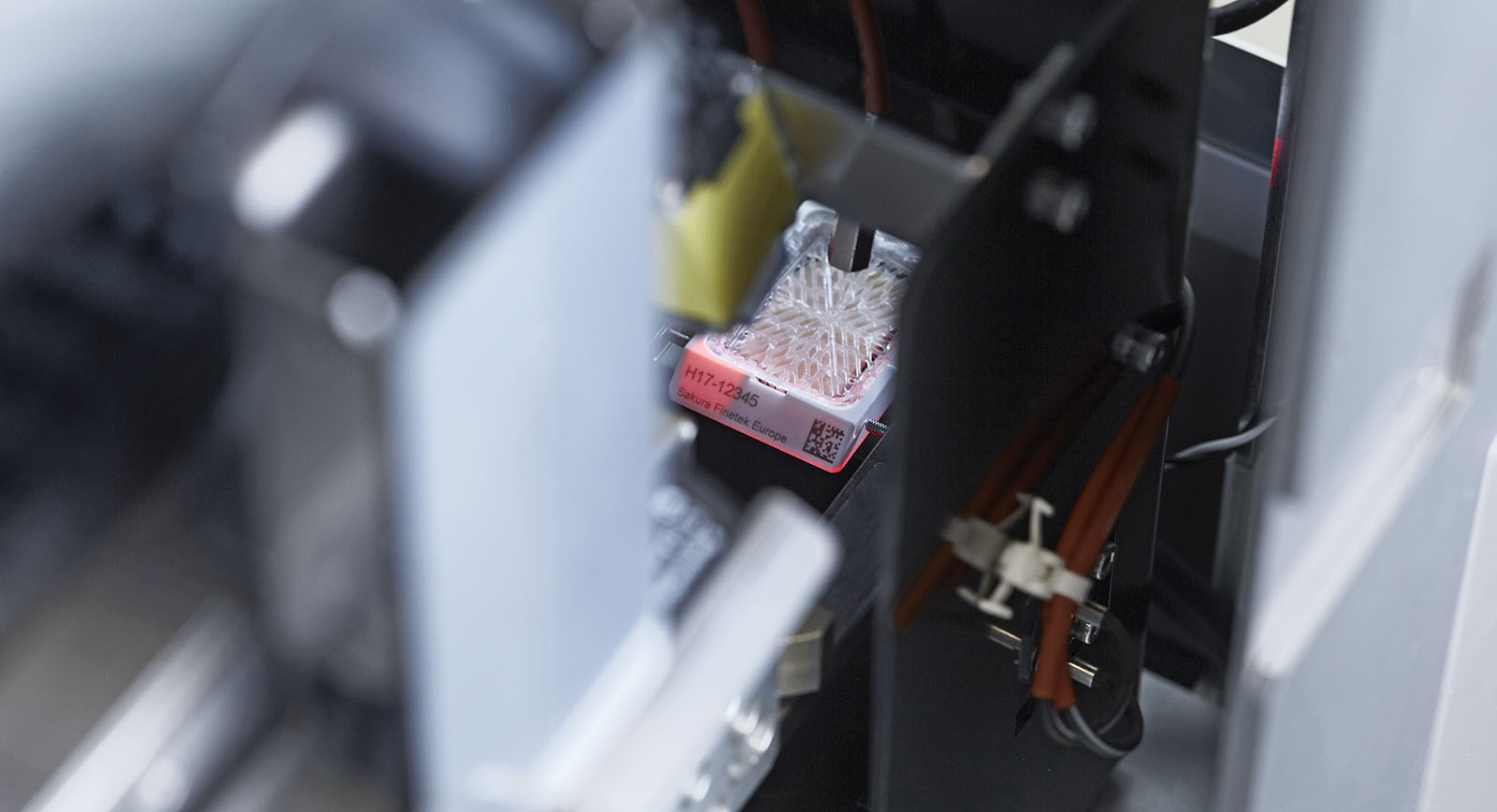
From collection and registration to processing, embedding, cutting, staining and molecular analysis, every step is carried out with precision and purpose:
- The sample is preserved to protect its structure.
- It’s digitally logged and tracked through every phase.
- Water is replaced by paraffin to stabilise the tissue.
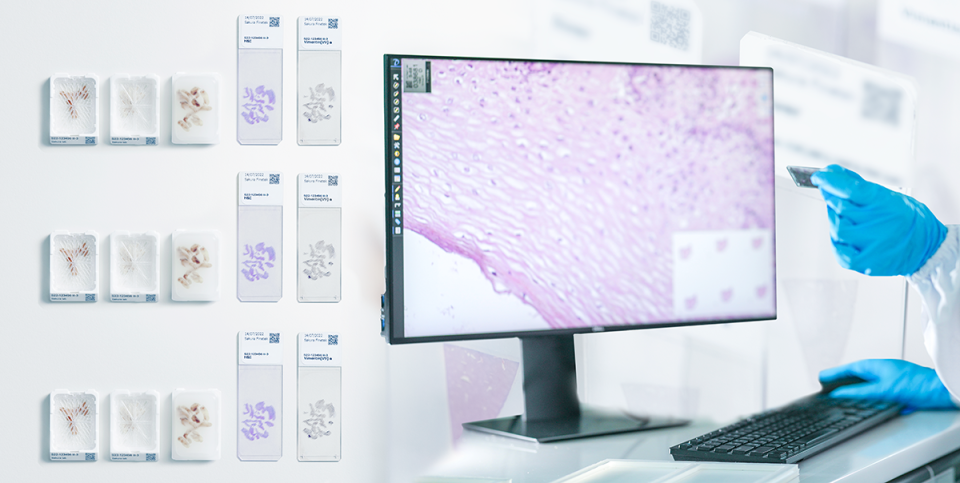
- Ultra-thin slices are cut, placed on glass slides and stained.
- A pathologist examines the sample under a microscope, sometimes performing additional molecular tests to refine the diagnosis.
This is the scientific side of the story, unseen by patients, but essential for ensuring accuracy, reliability and confidence in every result.
While this process unfolds, patients wait.
In our ambition to bridge the gap between the world of the patient and the pathology world in the hospital, we have created an infographic detailing the steps of the journey of tissue through the lab. With this infographic, we hope to alleviate the strain of waiting for patients and to give them an understanding of what happens in between appointments.
The weight of waiting
Our investigation of the patient journey from 2023, based on a sample of patients in the Netherlands, revealed that waiting is the most emotionally intense part of the diagnostic process. For many patients, the time between biopsy and diagnosis, often two weeks or more, feels like life on pause.
"Every day waiting is a day too long," one participant said.
Despite this, most patients trust the process. They often believe that the tissue must be “cultured” before results can be given; an incorrect assumption, but one that helps them make sense of the delay.
Patients also tend to associate longer wait times with higher accuracy, accepting that the wait is the cost of this confident diagnosis. They don’t doubt the competence of healthcare professionals, but they do feel the emotional burden of uncertainty.
Four personas, four ways of waiting
Not every patient experiences the wait in the same way. The study identified two personality traits that strongly shape experience: sensitivity to stress and need for control. Together, these define four patient personas, each requiring a different approach for communication and support. You can find an overview of the personas following from the research below.

Evidently, two patients may undergo the same biopsy but experience the wait completely differently. This kind of diversity in reactions stresses the importance of educating patients about what goes on behind the scenes.
The pathologist: from behind the microscope to the centre of the journey
In a previous Sakura webinar called “The Future Role of the Pathologist in the Patient Journey”, Dr. Empar Mayordomo Aranda, Head of Bone and Soft Tissue Pathology at La Fe University Hospital in Valencia reflects on how the pathologist’s role is evolving:
“Pathologists play a decisive role in diagnosis, yet most patients never meet them.”
“A diagnosis is not just a medical statement,” Dr. Mayordomo says. “It’s a defining moment in someone’s life.”
By making the pathologist’s contribution more visible, even indirectly, through communication or patient education, we can help patients understand what is happening to their tissue and why the process takes time. This visibility builds trust and reassures patients that care is happening, even when they can’t see it.
Bridging the journeys
The journey of the tissue and the journey of the patient are deeply connected, yet often experienced apart.
Bringing them together means creating a system where accuracy and empathy work hand in hand.
Some of the most effective steps don’t require new technology, just a new perspective:
- Explain what’s happening behind the scenes
Simple visual tools, such as Sakura’s Tissue Journey infographic, can transform confusion into understanding. - Share progress, not just results
Patients feel reassured when they know their sample is “moving” through the process. - Adopt communication styles that fit the patient’s persona
A few words can make the wait more bearable. - Empower the pathologist’s voice
Humanising their role helps patients trust the process. - Reduce the wait time
Reducing the turnaround time between biopsy and diagnosis doesn’t just improve laboratory efficiency, it reduces the emotional strain on patients waiting for answers.
At Sakura, we’re committed to empowering pathologists and helping their laboratories deliver diagnostic excellence.
EMWEB0029EN Rev.01